

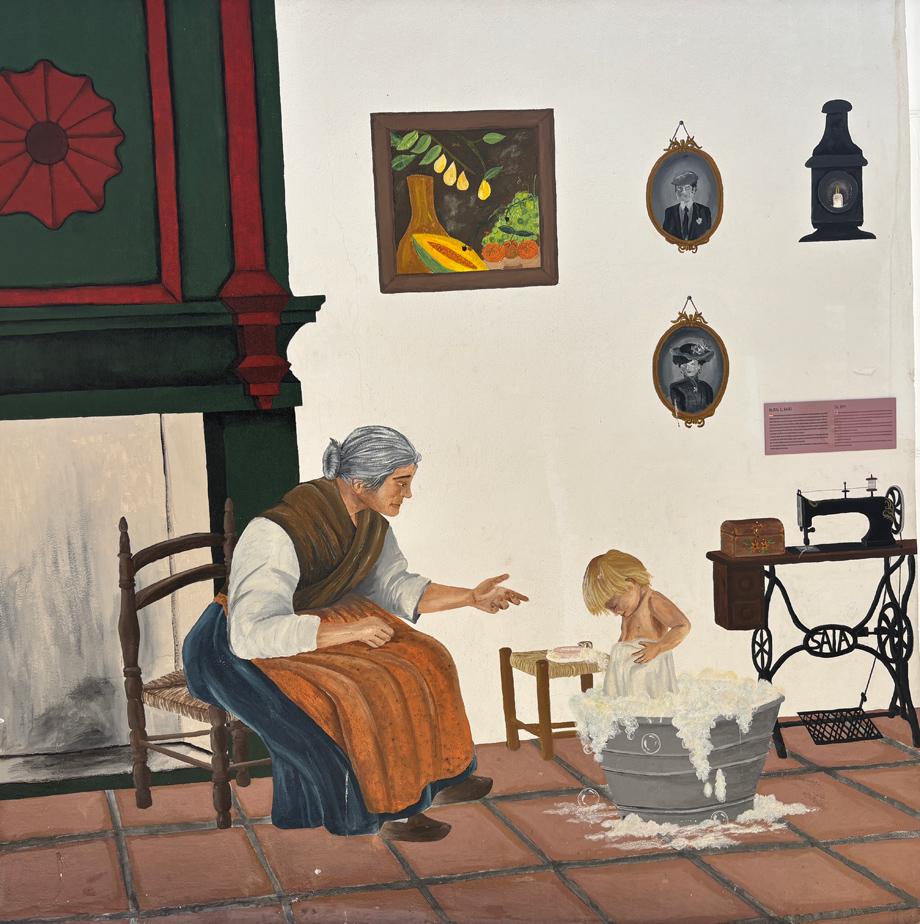
The Bath Mural
C/ Iglesia
The scene takes us back to everyday life in the past, where a woman bathes a child in a washbasin in the middle of the living room, reflecting the simplicity and warmth of family life at the time. To one side, a sewing machine — a symbol of household tasks and the effort of those who made clothes for their families — adds an authentic touch to this traditional setting. This image speaks of a time when the home was the centre of life, filled with care, work and shared moments that strengthened family bonds.
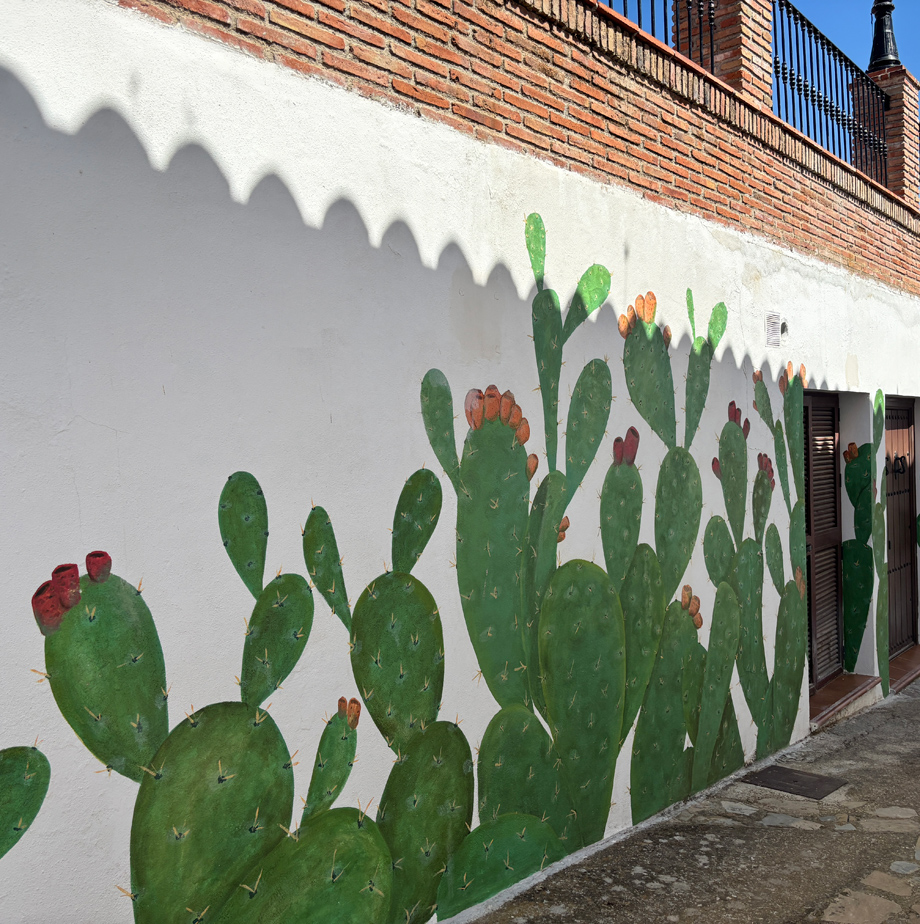
Chumbera Mural
C/ Iglesia
Prickly pears, with their characteristic fruits — the chumbos — are an emblematic plant of the region. These edible, refreshing fruits have long been a vital resource in rural life, providing nourishment during the summer.
Under the blazing summer sun, prickly pears rise with their untamed beauty, spreading their green pads over the dry earth. Their fleshy leaves, dotted with spines, hide a golden and orange treasure: the chumbos, sweet fruits that ripen in the sunlight. Their flavour, somewhere between exotic and familiar, evokes childhood memories — of patient hands peeling their spiny skin to reveal the juicy pulp that satisfies hunger and sweetens long afternoons.
Prickly pears are more than just a plant; they are a symbol of resilience, of life that flourishes even in arid landscapes, in times when the land offered its gifts to those who knew how to wait.
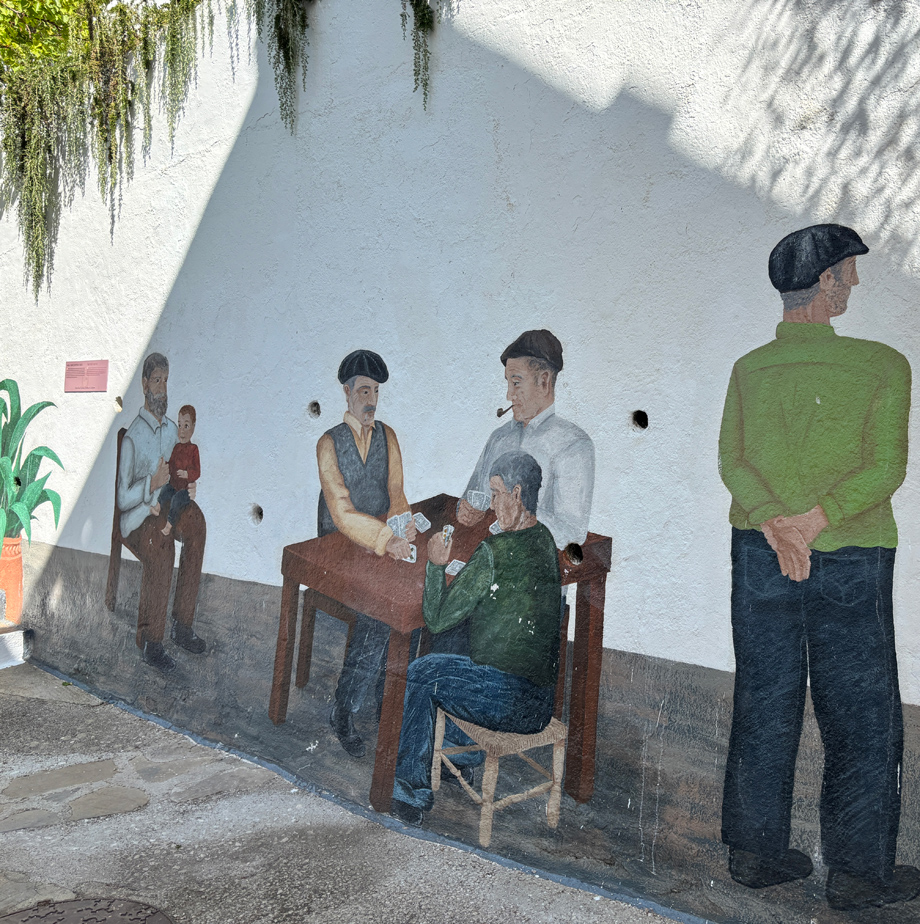
Time for Rest and Play Mural
C/ Zepaire
At the end of a long day, there was always time to unwind. Some shared tender moments with their grandchildren, while others enjoyed a game of cards, laughing and chatting cheerfully, or simply sipping a glass of local wine. These moments outdoors are a clear example of a simple, community-centred way of life, where companionship was essential to enjoying everyday moments.
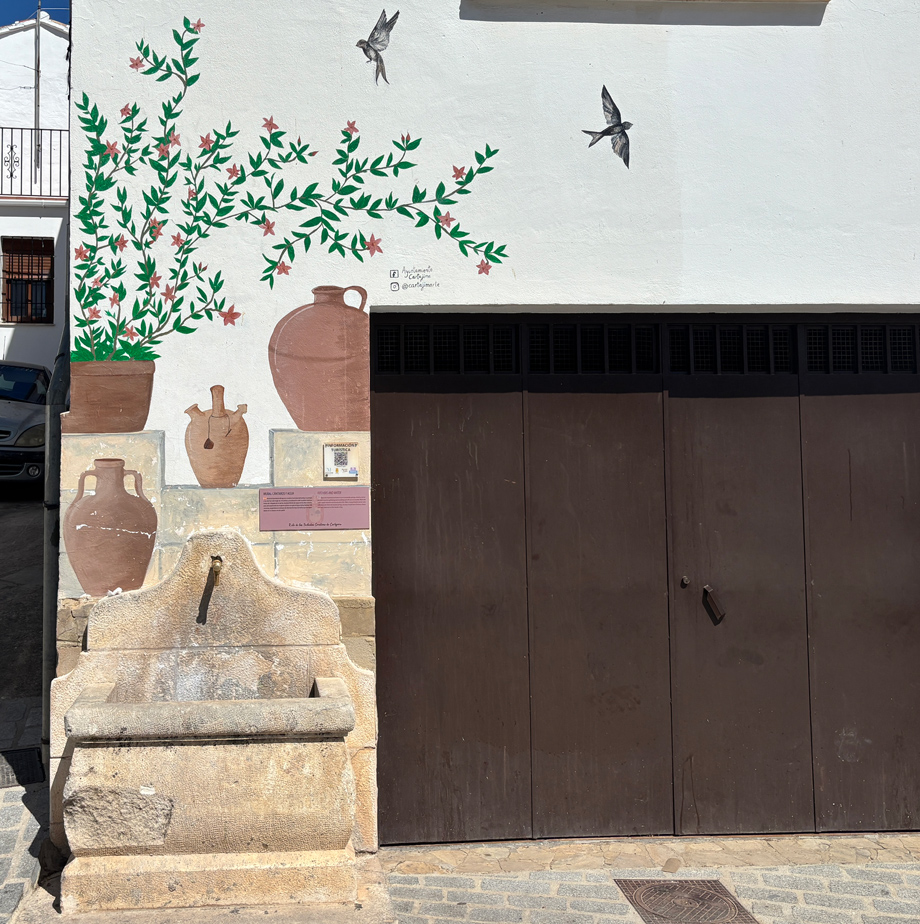
Pitchers and Water Mural
C/ Nueva
Given the importance of water in our village, the fountains, streams and rivers have long been places for neighbours to meet and socialise. Before the arrival of the water supply network in the 1960s, it was mainly the women who collected water from the nearest fountains, carrying it in pitchers of various shapes and sizes, balanced on their heads or on the hip.
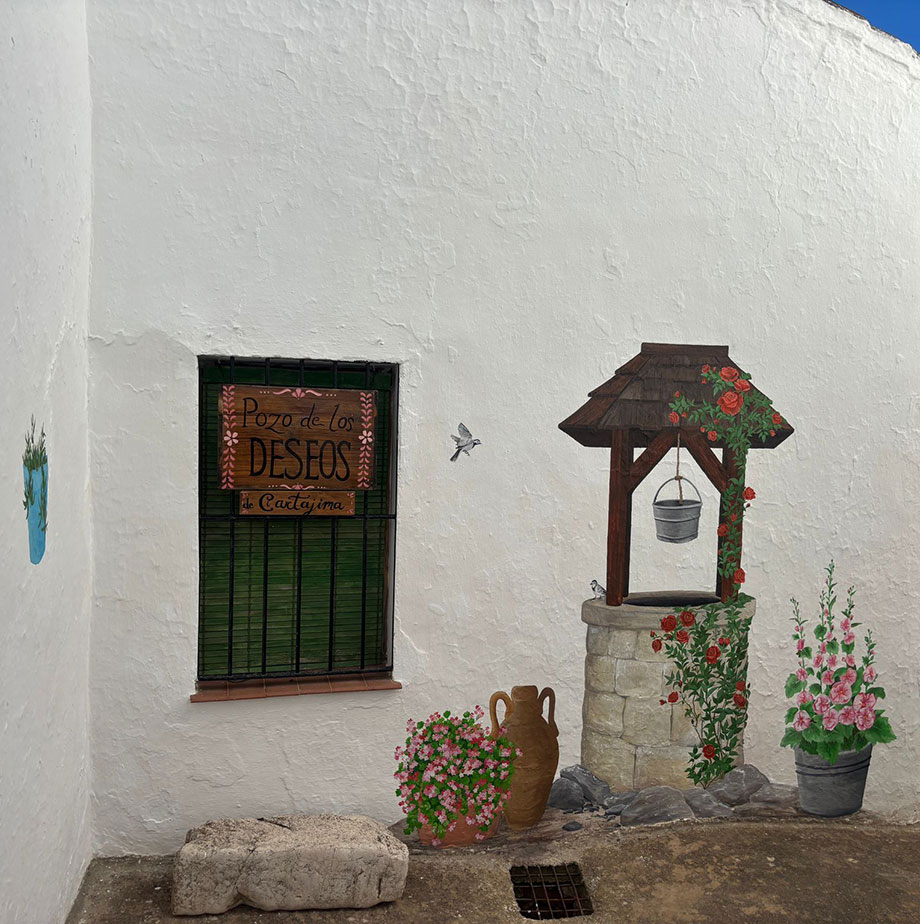
Wishing Well Mural
C/ Nueva (dead-end street)
This mural highlights the importance of the well in a village like Cartajima. The well — directly linked to water, and water being essential for life, whether for drinking, cooking or farming — also served as a meeting place for neighbours. This mural honours that history, recalls the significance of water and community work, and helps pass on to new generations the value of what allowed the village to grow and sustain itself.