
The Chestnut Tree Mural
C/ Nueva
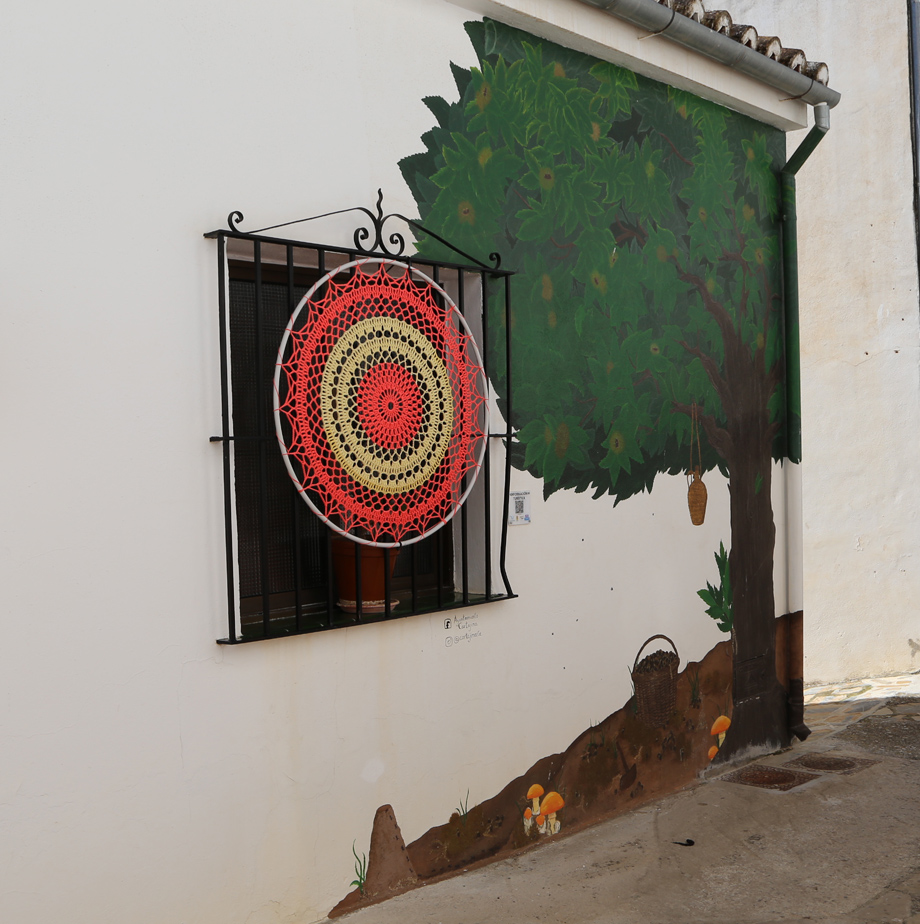
Scientifically known as Castanea sativa, it is the predominant species in the Genal Valley. With a rounded shape of about 25–30 metres, a straight, short and thick trunk, and a flower popularly called “mocos” due to its shape, the chestnut tree is deciduous and bears its fruit (the chestnut) in autumn (October), providing a very important source of income for the villagers.
Several trails in our municipality run through these woodlands, with the best time to walk among them being from May to December. In spring and summer, their green colour and the play of light encourage peaceful strolls. When autumn arrives, the landscape transforms into a “Copper Forest,” as its yellow and ochre tones invite us to observe and enjoy new sensations—within the same place.
Cartajima Woman Mural
C/ Zepaire
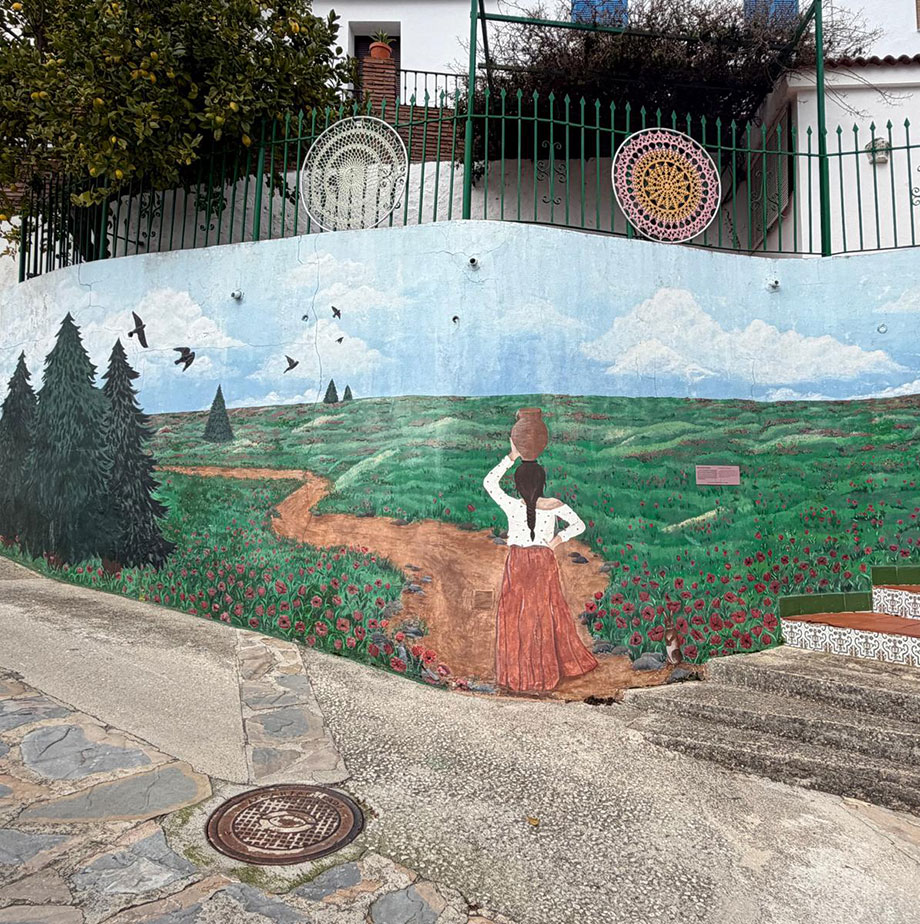
Here you stand before the majesty of our landscapes, where the poppy was once one of the predominant flowers when part of the land was used for grazing. In remembrance of that past, this mural pays tribute to the women of Cartajima—their work, dedication and effort—because although today every home has running water, there was a time when this was not the case.
Before 1965, women devoted part of their time to fetching water from the fountains, carrying it in pitchers on their heads or hips. Another of their many tasks was washing clothes and hanging them to dry by the river, with both the Molino Real and Molino Juan riverside areas being several kilometres from the village.
Tradition in the Countryside Mural
Avenida Fernando VII
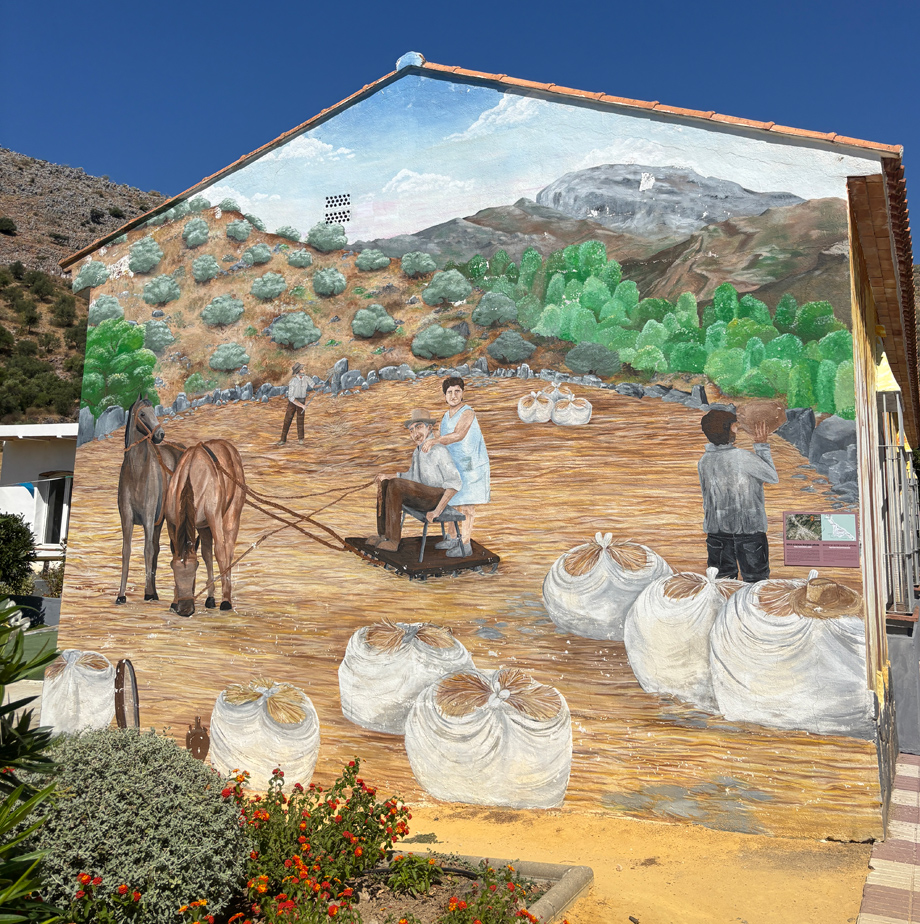
In the past, harvesting was one of the most important and meaningful tasks in rural life. It was a key date on Cartajima’s calendar. Men cut the grain manually with sickles, while women filled sacks with the collected ears of wheat. Once the harvest was finished, the sacks were loaded onto mules, which carried them to the threshing floor. There, the threshing process began—an artisanal method used to separate the grain from the straw.
This scene represents the legacy of a time when agricultural work sustained daily life, preserving traditions that shaped our identity.
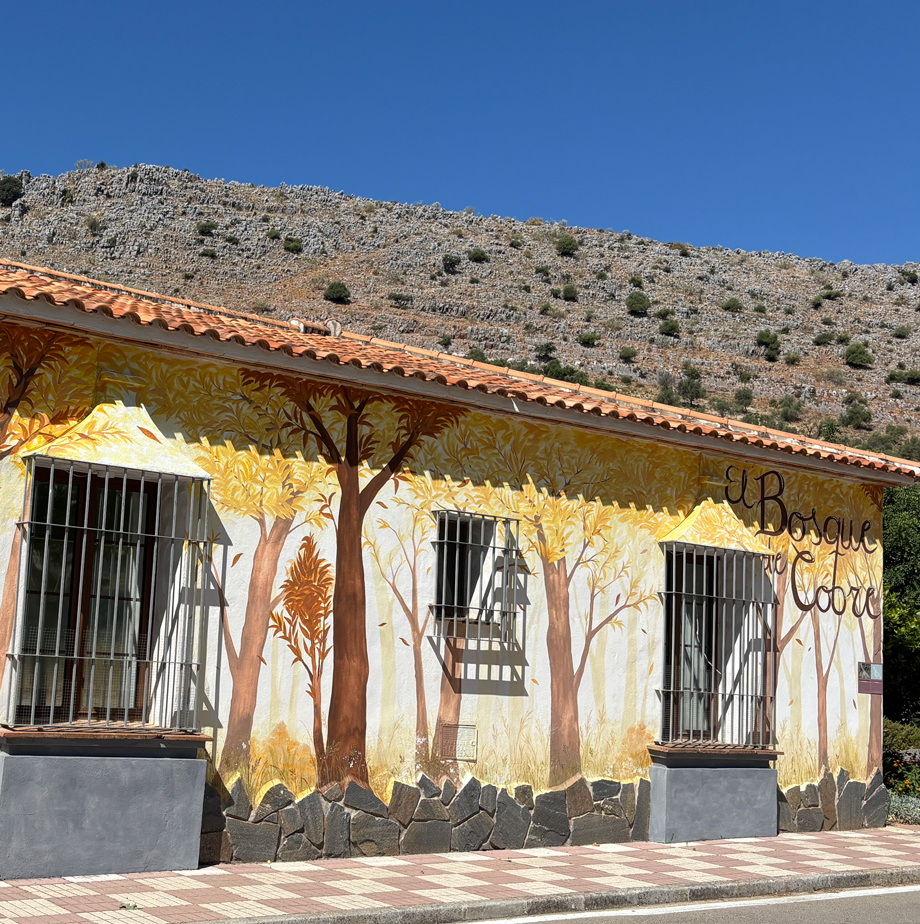
The Copper Forest Mural
Avenida Fernando VII
Cartajima is the gateway to the Copper Forest—this is where it begins. It is a unique natural phenomenon experienced in our village and its surroundings during autumn (mainly in October and November), when the chestnut trees transform their foliage into an explosion of ochre, yellow and reddish tones. This landscape, which seems taken from a storybook, invites visitors to wander along paths that wind between the trees, offering an incomparable visual and sensory experience. Beyond its beauty, the Copper Forest symbolises the connection between nature and local traditions, as the chestnut tree not only enhances the landscape but is also an important source of resources and livelihood for the people of the area.
Crossroads Mural
Avenida Andalucía
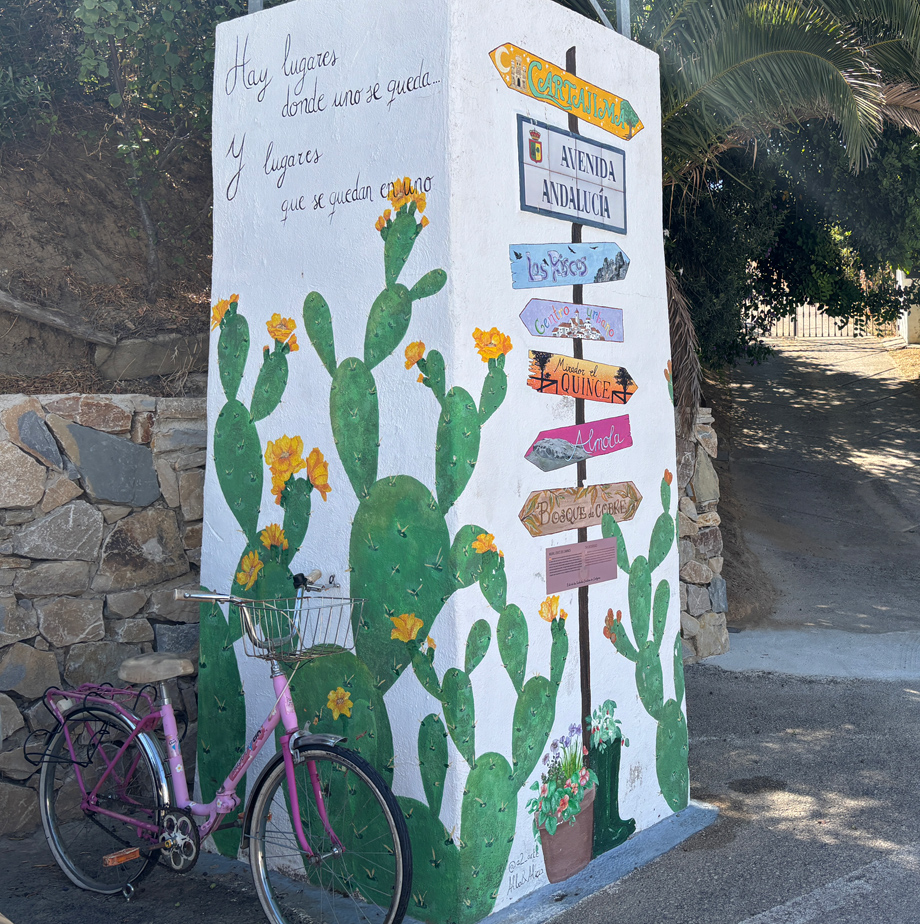
Cartajima is a crossroads of paths that connect landscapes and cultures in the heart of the Genal Valley. Its trails, inherited from ancient times, once served as passageways for travellers, merchants and locals, linking villages and traditions. Today, these paths invite you to discover its natural wealth, its history and the peaceful rhythm of its streets—a place where every crossroads tells a story, and where past and present meet.
There are places where one stays, and places that stay within us — and Cartajima is, without a doubt, both at once.